
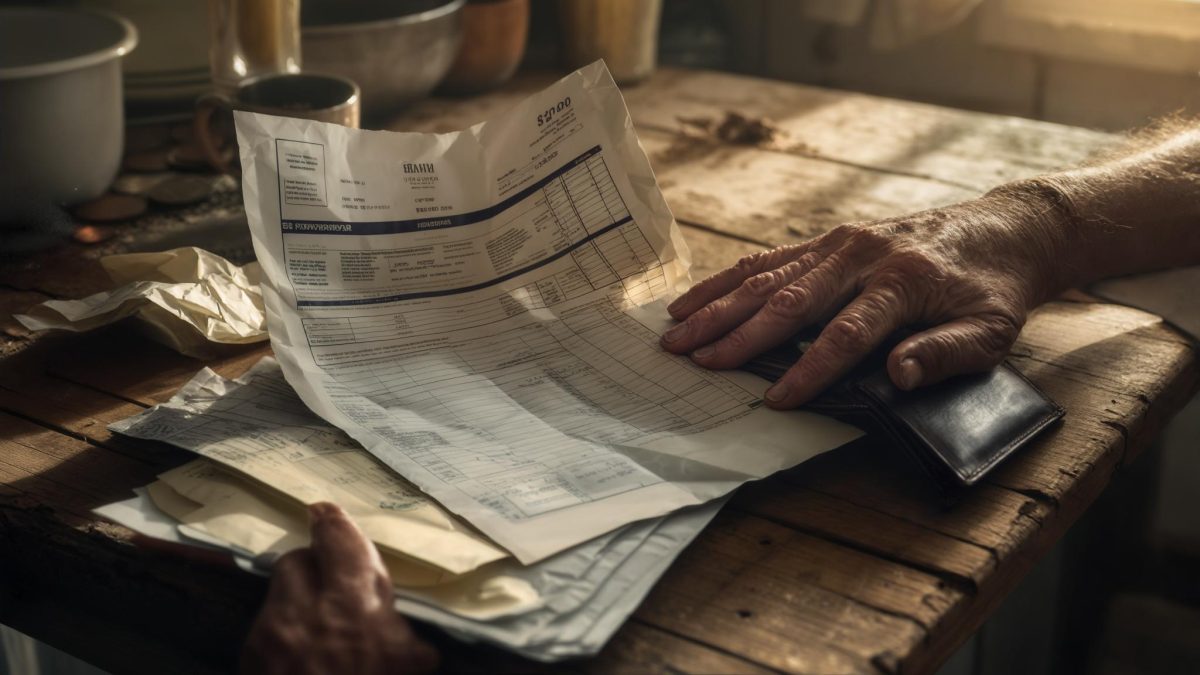
How well do you actually know your household’s complete financial picture — not just your accounts, but the ones your partner handles alone?
I first connected with Lorraine Dupree through a financial counselor in San Jose who reached out to me in early March 2025. The counselor’s message was brief: she had a client whose situation was common, painful, and almost entirely preventable — and she thought it deserved a wider audience. A few days later, I met Lorraine at a coffee shop two blocks from her yoga studio. She arrived a few minutes early, ordered green tea, and spent nearly two hours walking me through the previous six months of her life.
Lorraine is 42, a part-time yoga instructor who built her practice around a master’s degree in integrative health she completed in 2015. She and her husband Marcus have been married for 16 years. Their daughter — who Lorraine asked me not to name — is 17 and heading to a four-year university in California this fall. Until February 14, 2025, Lorraine believed their finances, while tight, were basically stable.
They were not.
The Day the Refund Didn’t Come
When I spoke with Lorraine about that February morning, she recalled it without hesitation. She and Marcus had been expecting a federal tax refund of approximately $4,200 — money they had already mentally allocated toward their daughter’s first-semester housing deposit and a repair on their home’s aging water heater.
Instead of a direct deposit, she received a notice from the Bureau of the Fiscal Service informing her that the full refund had been intercepted under the Treasury Offset Program (TOP). TOP is a federal mechanism that allows the government to seize tax refunds to satisfy delinquent debts — including defaulted federal loans, unpaid child support, and certain state obligations — without advance notice to the taxpayer.
“I called Marcus first,” Lorraine told me. “And the silence on the other end of that call told me everything I didn’t know.” Over the next several days, the full scope of what Marcus had concealed came into focus. He had accumulated $29,000 across four credit cards opened without her knowledge, plus a $13,500 personal loan taken out in 2021 — a loan he had stopped making payments on in mid-2023. Total hidden debt: approximately $42,500.
The personal loan, processed through a federally administered lending program, had been referred to the Treasury Offset database after exceeding 180 days of non-payment. The intercept was automatic. Their entire $4,200 refund was gone before Lorraine had any opportunity to act.
A Decade of Pressure That Made the Blind Spot Possible
To understand how Lorraine arrived at that February morning, you have to understand the years that preceded it. When she completed her master’s degree in integrative health in 2015, she graduated carrying $71,000 in federal student loan debt. She had pursued the credential partly because she believed it would command higher per-session rates as an instructor — a calculation that has produced modest returns over the following decade.
For most of her daughter’s childhood, Lorraine paid between $1,100 and $1,400 per month in childcare — costs that, she told me, reliably consumed whatever she managed to set aside. “There were years where my entire income went to childcare and my loan payment,” she said. “Marcus’s salary was what we actually lived on. I didn’t ask questions about what was left over after bills.”
That division of labor — her income earmarked for specific costs, his income managing daily household expenses — created a structural blind spot. She never had consistent visibility into Marcus’s discretionary spending, and by her own account, she didn’t seek it. “We weren’t hiding things from each other on purpose,” she explained. “I thought. I was just too exhausted to look.”
What She Didn’t Know About Injured Spouse Relief
In the weeks after the refund was seized, Lorraine began researching her options. She discovered a provision she had never heard of before: the Injured Spouse Allocation, filed through IRS Form 8379. This form allows a spouse who bears no responsibility for the qualifying debt to reclaim their proportional share of a seized joint refund from the government.
Lorraine had not known about Form 8379 when she filed her 2024 return. Neither, it turned out, had her longtime tax preparer — a local accountant who had handled their joint returns for nearly a decade without ever flagging the form’s existence. “He apologized,” she told me flatly. “But an apology doesn’t bring back $4,200.”
She filed Form 8379 in late March 2025. Based on her income of approximately $38,000 relative to Marcus’s $74,000 for that tax year, her proportional share of the refund was estimated at around $1,450. The $2,750 remainder — tied to Marcus’s share — remained with the government, applied toward the defaulted loan balance.
The Harder Math: College Costs on a Compromised Foundation
The seized refund was painful. The deeper wound, Lorraine told me, is what the hidden debt means for her daughter’s college financing. The university her daughter will attend carries an estimated annual cost of attendance near $34,000 before financial aid, and Lorraine had been counting on savings — including that refund — to bridge early gaps.
The FAFSA, which determines federal student aid eligibility, calculates need based on reported household income and assets. Because Lorraine and Marcus filed jointly for 2024, their combined income of roughly $112,000 placed them in a bracket that qualifies for limited grant funding. The $42,500 in hidden debt — which now requires structured monthly repayment — reduces the family’s actual disposable income considerably, but it does not reduce the income figure the FAFSA uses to calculate aid.
Lorraine and Marcus have since enrolled in couples financial counseling — with the same counselor who eventually connected us. They have set up a shared account with full visibility to both spouses and are working through a structured repayment plan for the credit card balances. She described the process as “functional but not fixed.”
A Partial Recovery and What Comes Next
When I followed up with Lorraine in early April 2026, the IRS had processed her Form 8379 and issued a check for $1,380 — slightly below the estimated $1,450, based on the agency’s recalculation of her proportional income share. She had deposited it directly toward her daughter’s housing deposit.
The $2,820 difference — the share of the original refund attributed to Marcus’s income — remains with the government, credited against the defaulted loan. That loan still carries approximately $9,800 in remaining principal, according to what Marcus disclosed during their counseling sessions.
Lorraine told me she plans to file as married filing separately for tax year 2025, a move that will fully shield her refund from any future offset tied to Marcus’s accounts. She is currently working with a new tax professional to weigh the tradeoffs, since filing separately can affect eligibility for certain credits and deductions available to joint filers.
“I don’t think I’m angry anymore,” she told me near the end of our last conversation, setting down her tea. “I’m careful now. Careful in a way I wasn’t before.” She paused for a moment. “I wish it hadn’t cost me $4,200 to learn to ask questions.”
Sitting across from Lorraine in that San Jose coffee shop over a year ago, I was struck by something she said near the start of our interview — before the dollar amounts, before the forms. “I built a career around balance,” she told me, a dry, small laugh in her voice. “Turns out I wasn’t keeping it at home.”
Her story is not about one catastrophic decision. It is about the slow accumulation of trust, exhaustion, and divided financial labor that can quietly leave a household exposed — and about what it looks like when that exposure arrives, without warning, on a government notice dated February 14th.
Related: She Filed for Social Security at 67 — Then Learned Her Graduate School Debt Could Still Follow Her Into Retirement
Related: When Hidden Debt and Caregiving Costs Collided, One Ohio Nurse Found Economic Relief She Never Expected



Leave a Reply