

Roughly one in four Americans between the ages of 55 and 64 have no retirement savings whatsoever, according to the Federal Reserve’s Survey of Consumer Finances. That statistic is easy to read and easy to forget — until you sit across from one of those people at a folding table in a Tampa community center and hear them describe what “no savings” actually looks like at 59.
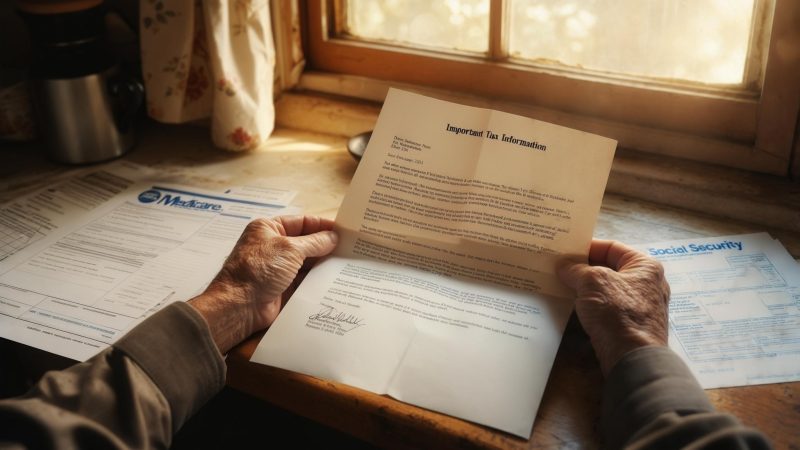
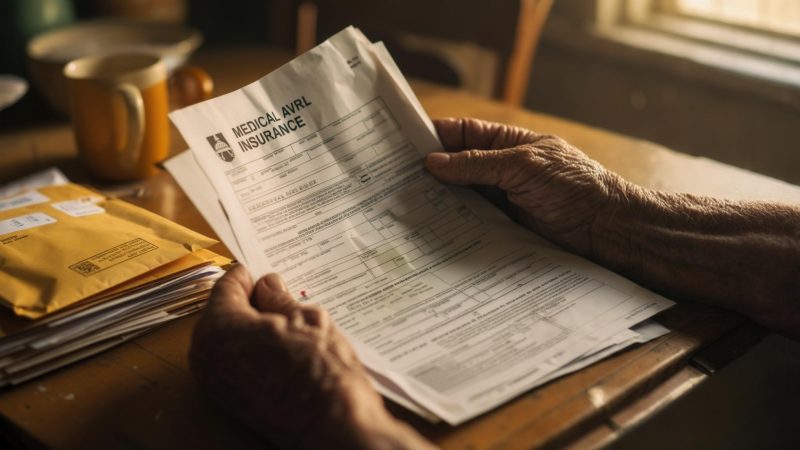
That’s where I met Eddie Quintero last March. The Hillsborough County Community Resource Center had flagged his situation to my publication after he sought help navigating his benefits paperwork. He was sitting with a cup of coffee going cold beside him, a stack of insurance documents he’d printed and re-printed spread across the table like a puzzle he couldn’t solve. He shook my hand firmly and immediately said, “I’m not embarrassed. I just want people to understand how fast it sneaks up on you.”
A Lifetime of Work, A Zero Balance
Eddie Quintero has worked in manufacturing for 31 years. For the past nine, he’s been a machine operator at a mid-size parts factory on the outskirts of Tampa, pulling roughly $32,000 a year in gross wages. He’s not someone who avoided work. He raised two kids, buried his wife — Sandra passed from ovarian cancer in 2019 — and kept the lights on through all of it.
What he didn’t do was save. Not in a 401(k), not in an IRA, not in a savings account he earmarked for retirement. The factory he works for offers a 401(k) with a 3% employer match, but Eddie told me he never enrolled. “Every time I looked at the form, something else needed that money more,” he said. “Sandra’s last year of treatment, the car, one of the kids’ tuition. There was always a reason.”
By his own description, Eddie is an impulsive spender — he knows this about himself with the clarity that only comes from years of hard lessons. He bought a motorcycle in 2021 that he couldn’t afford and sold at a loss eight months later. He’s sent money to both adult children when they asked, even when his own account was near zero. “I’m the kind of person who thinks the next paycheck will fix everything,” he told me with a short laugh that didn’t quite reach his eyes.
The Injury That Changed the Numbers
In August 2023, Eddie tore his rotator cuff operating equipment at the factory. The injury qualified him for partial disability benefits through Florida’s workers’ compensation system, which currently pays him $847 per month on top of his reduced work schedule. He’s back on the floor now, but on lighter duty and shorter hours, which cut his effective annual income to closer to $26,000.
The disability payments sound like a cushion. They’re not. Eddie’s monthly expenses — rent at $950, utilities averaging $160, groceries around $280, the car payment at $310, and various smaller bills — total just over $2,400 a month before health insurance. The $847 helps, but it doesn’t close the gap.
Then, in January 2026, his employer-sponsored health insurance premium jumped from $287 per month to $574 — an exact doubling. The factory cited rising carrier costs and a shift in the plan’s structure. For Eddie, that $287 increase landed like a punch he never saw coming. “I actually called HR thinking it was a mistake,” he told me. “The woman on the phone was apologetic about it. That’s when I knew it was real.”
The Social Security Question He Keeps Circling
When I asked Eddie what his retirement plan looked like, he paused for a long moment. “Social Security,” he said finally. “That’s it. That’s the whole plan.”
Eddie knows he can claim Social Security retirement benefits as early as age 62. What he’s only recently started to understand — through conversations at the community center — is what that early claim actually costs him. According to the Social Security Administration, claiming at 62 instead of full retirement age (67 for people born after 1960) permanently reduces monthly benefits by up to 30%.
The estimates above are based on Eddie’s approximate earnings history, calculated using the SSA’s online estimator tools. The gap between claiming at 62 versus 67 is roughly $540 per month — a difference that compounds across every year of retirement. Eddie stared at that table when I showed him the projections. “That’s not small money,” he said quietly. “That’s groceries. That’s utilities.”
The reality is that Eddie may not have the luxury of waiting. His shoulder may not let him stay on the factory floor until 67. His income, even with disability payments, barely covers his costs today. For him, the question of when to claim Social Security isn’t a spreadsheet exercise — it’s a pressure valve. He needs relief, and he needs it soon.
What the Community Center Helped Him See
The benefits counselor at the Hillsborough County center walked Eddie through several programs he didn’t know he qualified for. He’s now enrolled in the Low Income Subsidy program — sometimes called “Extra Help” — which assists with Medicare Part D prescription costs, according to SSA.gov. He’s also applying for SNAP benefits, which he’d previously assumed were “for people worse off than me.”
The survivor benefit detail stopped Eddie mid-sentence when the counselor raised it. Sandra had worked steadily as a dental hygienist for 18 years before her illness. Eddie hadn’t known that her work record could have any bearing on his benefits. “Nobody ever told me that,” he said when we spoke afterward. “I’ve been grieving and working and surviving and nobody ever said, ‘Hey, her contributions count for something.’”
A Partial Reckoning, Not a Resolution
When I asked Eddie how he felt leaving the community center that day, he didn’t say “relieved” or “hopeful” — the tidy emotional words that make for easy endings. He said “less stupid.” It was a self-deprecating answer that carried something real in it. He’s not out of trouble. He’s just oriented now, which is not the same thing.
His insurance premiums are still $574 a month. He still has $0 in retirement savings with roughly six years left before he can access Social Security without steep penalties. His shoulder aches in the Florida humidity, and the factory floor isn’t getting easier. He told me he’s started putting $50 a month into a basic savings account — not because $50 will save him, but because starting the habit felt necessary. “It’s almost insulting, how small it is,” he said. “But it’s something. It’s the first something I’ve done.”
Sitting with Eddie Quintero for two hours in that community center, what struck me most wasn’t the financial peril — though it is real and significant. It was the gap between how hard he has worked and how invisible the system’s complexities had been to him. Survivor benefits. Earnings tests. Benefit reduction curves. These aren’t obscure technicalities; they’re the rules that will determine what his retirement looks like. He’d just never had anyone explain them in plain language before that afternoon.
He’s 59. He has time to make some of this better — not all of it, but some. What he needed first was to understand the actual terrain. That part, at least, is starting to take shape.
Related: She Filed for Social Security at 67 — Then Learned Her Graduate School Debt Could Still Follow Her Into Retirement
Related: I Met a 66-Year-Old Portland Firefighter Who Had Nothing Saved for Retirement — Here’s What She Found


Leave a Reply