
The Sacramento Public Library on Stockton Boulevard doesn’t look like a place where financial stories begin. But on a Tuesday evening last February, folding tables were set up near the periodicals section, covered in Medicare brochures and staffed by county benefits counselors in lanyards. I was there to cover the enrollment event for a piece I was working on about late-stage Medicare confusion. That’s when Carlos Ramos walked up to one of the counselors, a crinkled envelope in his hand, and said, quietly but clearly: “I think my bill is wrong.”
It wasn’t wrong. That was the problem.
The Man Who Did Everything Right
When I sat down with Carlos Ramos after the event, I expected a story of procrastination — someone who missed a deadline and paid the price. What I found instead was the opposite. Carlos, 65, is a home health aide who has worked in Sacramento for more than a decade, most recently with a regional home care agency where he manages a caseload of elderly and post-surgical patients. He holds a master’s degree in gerontological social work, a credential he earned in his late forties that he said cost him “more than I care to admit.”
Carlos had been preparing for Medicare enrollment since 2024. He’d attended two informational seminars, downloaded the Medicare & You handbook, and built a spreadsheet comparing Medigap Plan G versus Plan N. He’d marked his 65th birthday — January 14, 2026 — in red on his kitchen calendar as the date everything needed to be in place.
“I am not someone who wings things,” Carlos told me, almost defensively. “I have a folder. I have tabs in the folder. I researched this for a year.” He showed me photos on his phone: a color-coded binder with sections for Part A, Part B, Part D, and Medigap. The man was meticulous. And still, he got blindsided.
The Number That Didn’t Add Up
Carlos enrolled in Medicare Parts A and B through the Social Security Administration’s online portal in November 2025, during his Initial Enrollment Period. He selected a stand-alone Part D drug plan and a Medigap supplement. His spreadsheet showed a projected monthly outlay of roughly $185 for Part B — the standard 2025 premium — plus another $45 for his Part D plan, and $110 for his Medigap policy. Total: approximately $340 a month. He’d budgeted for it.
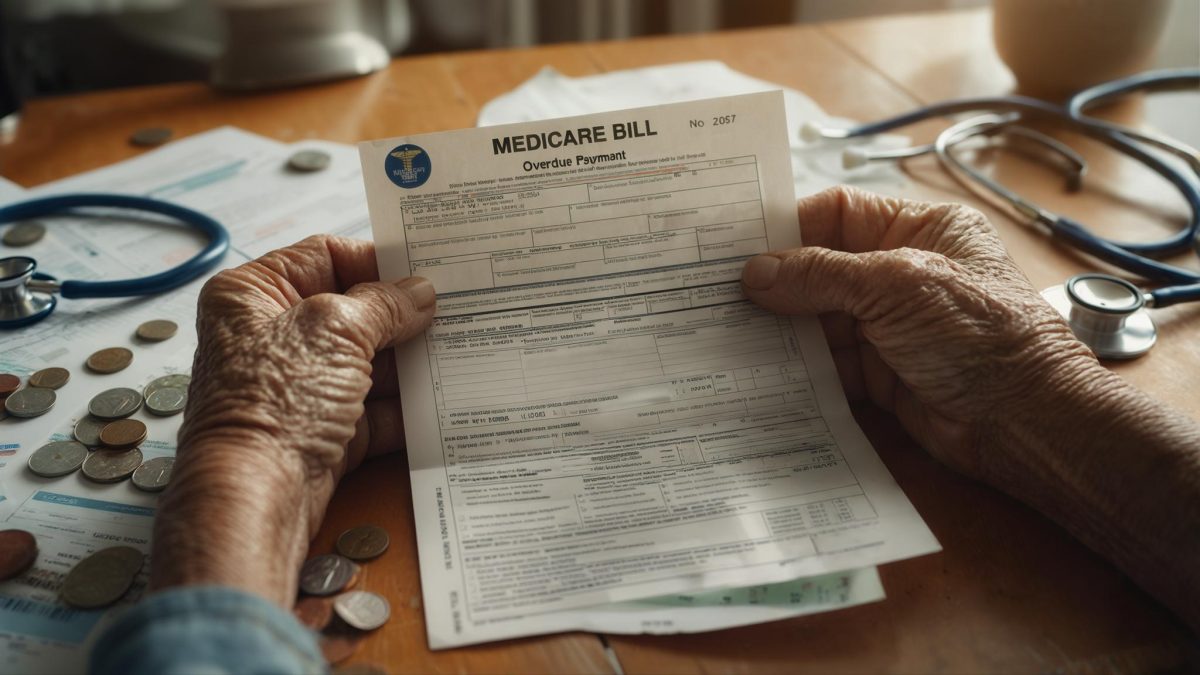
His first Medicare bill, which arrived in January 2026, was for $333 for Part B alone.
“I called Social Security and read them the number,” Carlos said. “The woman on the phone was very kind. She explained what IRMAA was. I had never heard that word in my life.” IRMAA — the Income-Related Monthly Adjustment Amount — is a surcharge added to Medicare Part B and Part D premiums for beneficiaries whose income exceeds certain thresholds, according to Medicare.gov. The surcharge is calculated using your Modified Adjusted Gross Income from two years prior — in Carlos’s case, his 2024 tax return.
His 2024 MAGI had come in at approximately $118,400. That placed him squarely in IRMAA Tier 2 for 2026, triggering a Part B surcharge of roughly $148 per month above the standard premium, plus an additional Part D surcharge of around $37 per month.
How One Hard Year Created a Two-Year Problem
Carlos’s 2024 income wasn’t typical. He explained what had happened during our conversation, slowly, like someone still processing the logic of it. In 2023, he had fallen behind on Sacramento County property taxes — roughly $4,800 in arrears — and was facing a potential lien on his home. He’d also been carrying approximately $61,000 in student loan debt from his master’s degree, debt he’d been chipping away at for years.
To resolve the property tax situation before penalties compounded further, Carlos made a $14,000 early withdrawal from a traditional IRA in early 2024. He also picked up additional client shifts throughout the year, logging somewhere around 60 hours a week for several months. Between his base salary, overtime, and the IRA distribution, his 2024 income crossed a threshold he hadn’t modeled in any of his spreadsheets.
The IRMAA two-year lookback is a structural feature of how Social Security administers Medicare premiums. The SSA uses the most recent tax return available when a beneficiary enrolls — which for 2026 enrollees means 2024 data. For someone like Carlos, whose income spiked in one year due to a combination of crisis-driven decisions, the timing was particularly punishing.
The Appeal That Didn’t Stick
At the library event, one of the benefits counselors walked Carlos through the SSA-44 form — a process for requesting an IRMAA redetermination based on a life-changing event. Carlos had retired from full-time agency work at the end of 2025, dropping to part-time. His 2025 income was projected at roughly $52,000. If SSA accepted his request, his 2026 premiums could be recalculated using that lower figure.
When I followed up with Carlos by phone in late March 2026, the determination still hadn’t come. He was paying $333 per month for Part B and absorbing it, though not gracefully. “I lose sleep over things I can’t control,” he told me. “And this is absolutely a thing I cannot control right now.” His student loans — now around $57,000 after years of income-driven repayment — continue accruing, and his property tax balance has been resolved but left him with almost no liquid savings.
He acknowledged the appeal might not succeed in full. SSA allows IRMAA redeterminations based on specific life-changing events — including retirement — but “reduction of work hours” can require more documentation than a clean retirement. Carlos’s situation, shifting from full-time to part-time rather than stopping work entirely, sits in murkier territory.
What Carlos Knows Now That He Didn’t Before
Carlos is not defeated by this. That much was clear when I spoke with him. He remains what he has always been — a planner — and the IRMAA experience has simply become new data to plan around. He told me he’s already made decisions for 2026 to keep his income lower, which should reduce or eliminate his IRMAA surcharge for 2028, when SSA will use his 2026 tax return.
“I know now that I have to look at Medicare like it’s part of my tax strategy,” he said. “It’s not separate. Every dollar I earn affects what I pay for health coverage. I just didn’t understand that before.” He’s also looking into whether his outstanding student loans — federal, from his graduate program — might qualify for any income-driven repayment adjustments now that his income has dropped, though that process is separate from Medicare entirely.
There’s a particular kind of exhaustion that comes from being a careful person who still gets caught off guard. Carlos Ramos carried that exhaustion with him into the Sacramento Public Library on a February evening, envelope in hand. He wasn’t looking for sympathy. He was looking for an explanation. He found one — though not the one he’d hoped for.
As I drove home that night, I kept thinking about his spreadsheet with its color-coded tabs. He had done the work. He had researched Part B and Part D and Medigap and enrollment windows. He had not researched a two-year income lookback built into a system that doesn’t send warnings. According to CMS data, approximately 8 percent of Medicare beneficiaries pay IRMAA surcharges in any given year — a meaningful minority, and one that skews heavily toward people who had one unusually strong income year, not sustained wealth.
Carlos Ramos is still waiting to hear from Social Security. His appeal is pending. His premium, for now, remains $333 a month. He pays it on time, because he is Carlos Ramos, and that is what he does. But he told me, at the end of our conversation: “I want other people to know about this before they turn 65. Not after.”
Sloane Avery Wren is a Senior Benefits Writer at First Person Finance. This article reflects one person’s reported experience and does not constitute financial or insurance advice.
Related: I Met a 63-Year-Old FedEx Driver With No Health Insurance — His Plan to Survive the Two-Year Wait for Medicare
Related: She Turned 67 With $23,000 in Hidden Debt and No Safety Net — How a Missed Medicare Program Changed Everything
.pvv-faq-section details summary::-webkit-details-marker{display:none}.pvv-faq-section details summary::marker{display:none;content:””}.pvv-faq-section details[open] summary .pvv-faq-arrow{transform:rotate(90deg)}




Leave a Reply