
The enrollment window for several Pennsylvania property tax relief programs closes each spring, and advocates who work with fixed-income seniors say the gap between eligible residents and enrolled ones remains stubbornly wide. That gap is exactly what brought me to a small brick house in Pittsburgh’s Brookline neighborhood on a grey Tuesday in late March 2026 — and to Patricia Novak, who answered the door in a cardigan and apologized, unprompted, for the water stain on the ceiling above the entryway.
“The bucket’s in the closet,” she told me, almost as a greeting. “I know where every leak is now.”
A Career Built on Reliability, a Retirement Built on Thin Margins
When I sat down with Patricia Novak at her kitchen table, she had just returned from a grocery run to a store twenty minutes away — not the closest one, but the one with better weekly specials. She is 65 years old, a retired postal worker, and she has been managing money this carefully for longer than most people realize.
Patricia worked 32 years as a mail carrier and processing clerk for the United States Postal Service, retiring in 2021 at age 60. Her federal pension through the Office of Personnel Management pays her approximately $1,640 per month before deductions for federal health insurance under the Federal Employees Health Benefits program. She became eligible for Social Security at 62 and began collecting early, which she now views with some ambivalence — her monthly benefit is roughly $890, reduced from what it would have been had she waited until her full retirement age of 67.
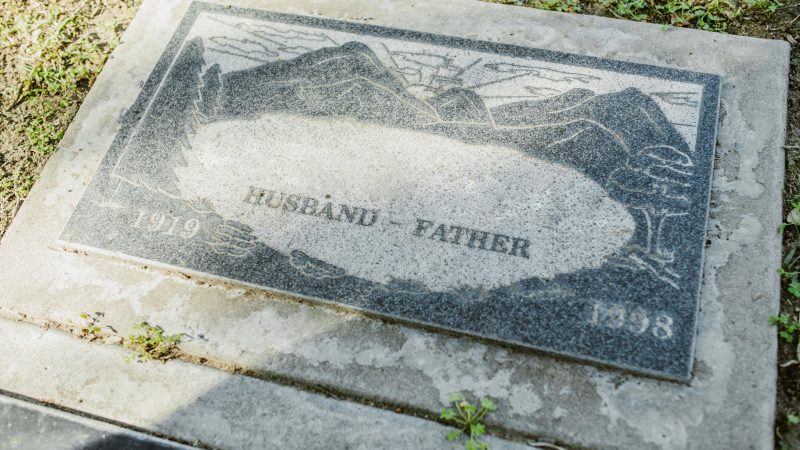
Three years ago, her husband Raymond died of a cardiac event at age 68. He had been collecting Social Security retirement benefits of approximately $1,450 per month. That income disappeared overnight. Patricia was not eligible for a full survivor benefit because her own pension triggers the Government Pension Offset, a provision that reduces or eliminates Social Security survivor benefits for people who receive a federal pension not covered by Social Security taxes. The offset reduced her survivor benefit to zero.
“I didn’t even know that rule existed until the Social Security office explained it to me after Raymond passed,” she told me, her voice measured and flat. “I just assumed I’d get something. Everyone assumes that.”
The House That Holds Everything Together — and Is Starting to Fail
Patricia has lived in her Brookline home since 1989. She and Raymond paid it off in 2017, and she has always considered it her most important asset — the thing that separates her from genuine financial precarity. But the house, built in the 1960s, is now presenting bills she cannot pay.
A roofing contractor she called last fall quoted her $11,400 to $14,000 for a full replacement. The furnace, original to the house, is what one HVAC technician described to her as “living on borrowed time.” A replacement unit, including installation, would run approximately $4,800 to $6,500. Together, those two repairs represent between $16,000 and $20,500 — more than six months of her total income before any living expenses.
Her savings — roughly $34,000 in a money market account — represent years of careful accumulation. But Patricia has a chronic kidney condition that requires quarterly specialist visits and medications not fully covered by her FEHB plan. She estimates her out-of-pocket medical costs run between $2,800 and $3,400 per year. Depleting that savings cushion for home repairs feels, to her, like trading one emergency for another.
She has looked into Pennsylvania’s property tax relief programs, including the Property Tax/Rent Rebate Program, which provides rebates to eligible seniors with annual incomes below $35,000. Her combined pension and Social Security income of roughly $30,360 per year puts her within the threshold, and she received a rebate of $650 last year. It helped. It did not come close to solving the problem.
The Daily Math of a Fixed Income
Sitting across from Patricia, I asked her to walk me through a typical month. She did not hesitate — she clearly runs these numbers in her head constantly.
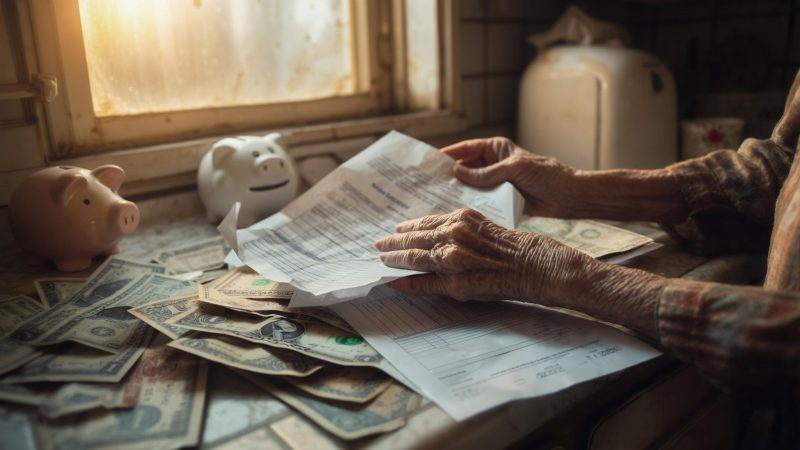
After her FEHB premium deduction of approximately $180 per month and federal income tax withholding, her take-home from the pension is closer to $1,380. Combined with her Social Security of $890, her working monthly income is roughly $2,270. Her fixed monthly expenses include:
- Property taxes (escrowed monthly): $310
- Utilities (gas, electric, water): $220 to $290 depending on season
- Groceries: approximately $280
- Prescription medications and copays: $140 to $200
- Car insurance and gas: $175
- Phone and internet: $95
That leaves her somewhere between $130 and $340 per month for everything else — clothing, household items, the occasional dinner out with her daughter, unexpected costs. There is no line item for home repairs. There never has been.
“People think because you have a pension you’re fine,” she said, pouring coffee she had clearly made before I arrived and kept warm. “A pension sounds like a lot until you sit down and do the math. Then it sounds like exactly enough to not quite make it.”
Pride, Children, and the Reluctance to Ask for Help
Patricia has two adult children. Her son lives in Columbus; her daughter is twenty minutes away in Mount Lebanon. Both have offered to help financially. Patricia has declined every time.
“They have their own mortgages, their own kids,” she told me. “I’m not going to be that burden. I worked my whole life so I wouldn’t have to be that.” She said it without bitterness, but with the particular firmness of someone who has repeated the decision to herself many times.
A social worker at her church had recently mentioned a local nonprofit that provides low-cost home repairs for income-eligible seniors, and Patricia had written down the name but not yet called. “I keep meaning to,” she said. She did not explain why she hadn’t. She didn’t need to.
Her daughter had also suggested she look into whether she might qualify for SNAP benefits given her income level. Patricia’s gross annual income of approximately $30,360 falls below the 2026 federal gross income limit for a one-person household, which sits at 130 percent of the poverty line — roughly $20,120 for a single person. Her income exceeds that threshold, making her ineligible for standard SNAP. The interaction of pension income and benefit eligibility is a wall that many retired government workers quietly run into.
What Comes Next, and What She Doesn’t Say Out Loud
Before I left, I asked Patricia what she was most worried about. She took a long pause — not the kind that means someone doesn’t know the answer, but the kind that means they’re deciding how much to say.
“Outliving it,” she finally said. “All of it. The money, the house, my health. Raymond was supposed to be here for this part.”
She is not destitute. She owns her home, carries no debt, and has savings. By many measures, she is better positioned than millions of American retirees. But the margin is thin enough that a single bad winter — a furnace that finally quits, a roof that gives way — could cascade into something much harder to recover from. And she knows it.
Walking back to my car past the bucket in the entryway closet, I thought about the number of people in houses exactly like Patricia’s — paid off, respectable, quietly leaking. The policy gaps she has fallen through are real and documented. The Government Pension Offset has faced repeated legislative challenges over the years, and advocates have long argued it penalizes public servants disproportionately. But for Patricia Novak, those debates are abstractions. The roof is not.
“I’m not complaining,” she said as I put on my coat. “I just want people to understand that doing everything right doesn’t always mean it works out the way you planned.”

Leave a Reply