
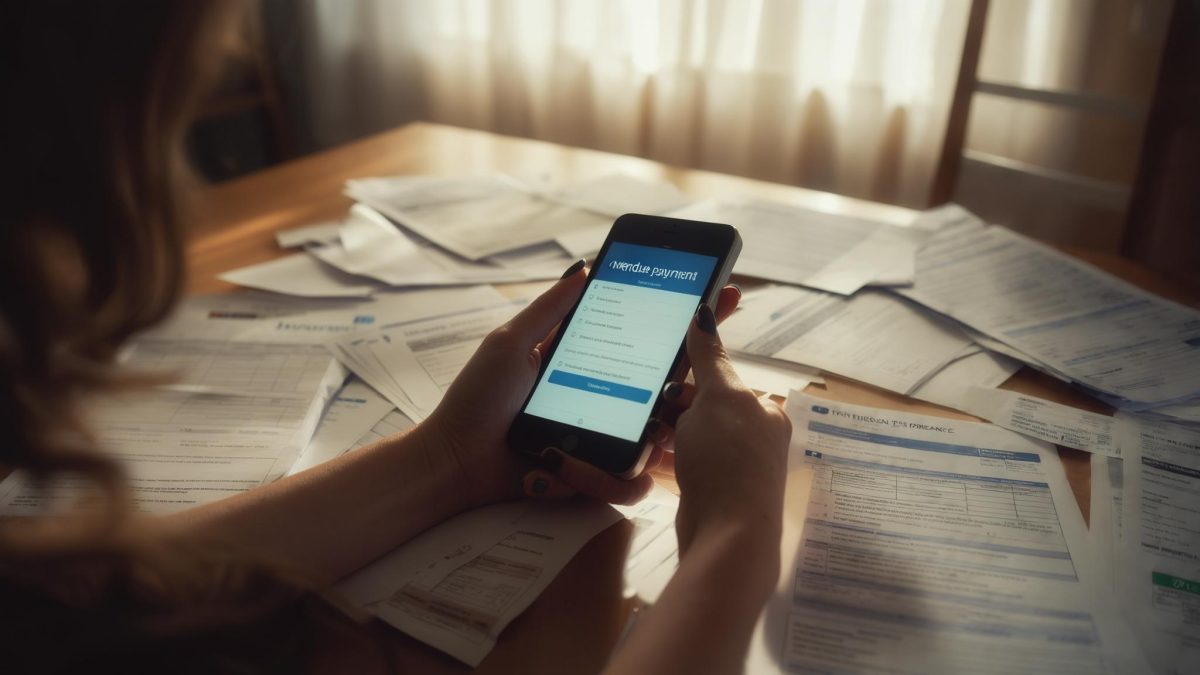
The FBI’s takedown of three India-based call centers impersonating the Social Security Administration — operations tied to an estimated $50 million stolen from Americans — made national headlines in early 2026. But behind every statistic is someone sitting at a kitchen table, phone in hand, trying to figure out if the voice on the other end is real. I met one of those people entirely by accident.
It was a Tuesday afternoon in late February. I was at a Harris Teeter off Falls of Neuse Road in Raleigh, North Carolina, staring at the same shelf of canned soup for longer than I care to admit, when a woman next to me made a dry comment about store-brand prices that made me laugh. We got to talking. By the time we reached the checkout line, Deborah Bianchi, 60, had told me more about her finances than most people tell their accountants. She said she hadn’t talked about any of it with anyone. I asked if she’d be willing to sit down for a proper conversation. She paused for a long moment, then said yes.
A Budget That Was Already Breaking Before the Call Came
When I sat down with Deborah Bianchi at a coffee shop near her apartment two days later, the first thing she did was pull out her phone and show me her bank app. She wasn’t looking for sympathy, she was making a point. “I want you to see the numbers,” she told me. “Because when I say I almost fell for it, I need you to understand why.”
Her husband, Marco, died in March 2024 after a short illness. He had been the one carrying employer-sponsored health insurance for both of them through his job at a regional manufacturing firm. When he died, Deborah was suddenly uninsured at 60 — too young for Medicare, which doesn’t begin until 65, and earning too much at her retail management job to qualify for Medicaid under North Carolina’s expanded program thresholds.
Her only immediate option was COBRA — the federal continuation coverage that lets workers and their families stay on an employer’s plan after a qualifying event like a spouse’s death. The monthly premium: $847. Her rent for a one-bedroom apartment in north Raleigh: $795.
On a retail manager’s salary of roughly $38,000 a year, those two line items alone consumed more than half her take-home pay. She was not buying extras. She was calculating whether she could afford both groceries and her blood pressure medication in the same week.
“I didn’t tell my kids,” she said, looking at her coffee cup. “They have their own lives. I didn’t want them worrying. I kept thinking I’d figure it out.”
The Call That Nearly Cost Her Everything
The call came on a Wednesday morning in January 2026. Deborah was getting ready for a closing shift. The number on her phone showed a Washington, D.C. area code. The man on the other end identified himself as an agent from the Social Security Administration and told her that her Social Security number had been “flagged in connection with a fraud investigation” and that her benefits — the ones she would be eligible to claim in roughly two years — were “temporarily suspended.”
She had never received a call like this. She was scared. The man spoke with authority and used what sounded like official language. He told her she needed to verify her identity and, to protect her funds, transfer $2,400 into a “secure federal account” while the matter was resolved.
“He told me the Social Security Administration never contacts people by phone to ask for money,” Deborah said, and then she laughed — a short, hollow laugh. “That’s what I told myself, too. But then I thought, what if it’s real? What if I ignore it and I lose my benefits? I’m 60. I’ve been paying into Social Security my whole life. Those benefits are the only retirement I have.”
She had pulled up her online banking. She was three minutes from initiating a wire transfer of $2,400 — money she didn’t easily have — when her daughter, Lia, called from Portland. Deborah answered on reflex. She told Lia what was happening. Lia told her to hang up immediately.
How These Scams Are Built to Target the Vulnerable
Deborah is not an outlier. The operation she nearly fell victim to was part of a sprawling network. According to the FBI’s 2024 Internet Crime Report, government impersonation scams — including SSA impersonation — represent one of the fastest-growing fraud categories targeting Americans over 50. The calls are engineered to exploit specific psychological pressure points: fear of losing benefits, fear of legal consequences, and the isolation that comes with not having someone nearby to reality-check the situation.
Deborah checked every box the scammers look for. She was financially stressed, recently widowed, living alone, and quietly ashamed of her circumstances. She had not told her children how tight things had gotten. She had no financial advisor, no HR department to call. She was, as she put it, “handling everything alone.”
The India-based call centers dismantled in this operation relied on a specific playbook, according to investigators. Callers posed as government officials, created artificial urgency around a victim’s Social Security number, and then directed victims to transfer money through wire transfers or cryptocurrency. Impersonation scams of this kind, per the Treasury Department’s 2026 National Money Laundering Risk Assessment, primarily originate from India-based call centers but often route funds through U.S.-based money mules to obscure the trail.
- Callers spoofed legitimate government phone numbers to appear credible
- Victims were told their SSN was “flagged” or “suspended” in a criminal investigation
- Payments were requested via wire transfer, cryptocurrency, or gift cards
- Calls targeted older Americans, particularly those approaching retirement age
- Victims were often told not to discuss the matter with family members
The COBRA Trap and What Came After
After the call, Deborah told Lia the full picture — the COBRA bill, the stretched budget, all of it. It was the first time she had said the numbers out loud to anyone. Lia flew in from Portland the following weekend.
As Deborah explained it to me, the conversation with her daughter cracked something open. She had been treating her financial situation as a personal failure, something to hide. “I kept thinking, if I just work harder, if I just figure it out,” she said. “But you can’t figure out $847 a month for health insurance on a retail salary. The math doesn’t work. It was never going to work.”
Through her state’s Health Insurance Marketplace — she had not looked into it before because she assumed she wouldn’t qualify for subsidies — Deborah found a silver-tier plan with a monthly premium of $218 after federal tax credits, based on her income. She dropped COBRA in February 2026, about 20 months after she had started paying it. In those 20 months, she had paid approximately $16,940 in COBRA premiums.
The math of that delay is difficult to sit with. Had she explored Marketplace options in April 2024 — when she first lost coverage — the potential savings could have exceeded $12,000 over those 20 months. Deborah knows this. She does not dwell on it for long when we speak, but the recognition is there behind her eyes.
“I didn’t know I’d qualify for the subsidies,” she told me. “I just assumed I made too much. Nobody told me otherwise. And I was too embarrassed to ask.”
What She Wants Other People to Hear
Deborah asked me, at the end of our conversation, whether her story would help anyone. I told her honestly that I didn’t know — but that the combination of financial pressure and fraud targeting is not a niche problem. The FBI’s joint operation with Indian authorities, which the FBI documented in detail, dismantled call centers that had collectively stolen from hundreds of Americans — and investigators believe most victims never came forward at all, out of the same shame Deborah described.
She filed a report with the SSA’s Office of the Inspector General after Lia encouraged her to. She does not expect to hear back. What she does have, for the first time in nearly two years, is a health insurance bill she can afford, a daughter who knows the truth, and a budget that — just barely — clears each month.
When I left the coffee shop, Deborah was still sitting at the table, checking her phone. She was not checking her bank balance this time. She was texting Lia. Some turning points don’t look dramatic. They look like a woman at a small table, finally letting someone in.
Related: When COBRA Costs More Than Rent: How One 31-Year-Old Is Navigating the Government Benefits Maze




Leave a Reply