

Have you ever picked up the phone and realized, mid-sentence, that the stranger on the other end already knows your name, your address, and the last four digits of the number that is supposed to be yours alone?
I met Lester Blanchard last November at an H-E-B in southwest Houston — the kind of chance encounter that starts with reaching for the same shelf of ground coffee. He noticed my press badge, asked what I covered, and within five minutes was describing the worst year of his financial life. Two weeks later, I sat across from him at his daycare center in the Meyerland neighborhood, notebooks open, listening to a story I knew other self-employed Americans needed to hear.
Lester is 64, married, and has operated Bright Futures Learning Center for eleven years. The center serves roughly 80 children and generates approximately $490,000 in annual revenue. By most measures, he is thriving. But in September 2023, a single phone call set off a chain of events that would take more than a year to even partially undo — and leave a financial overhang that is still pressing down on him today.
A Business Built on Trust — and a Phone Call That Took Nine Minutes
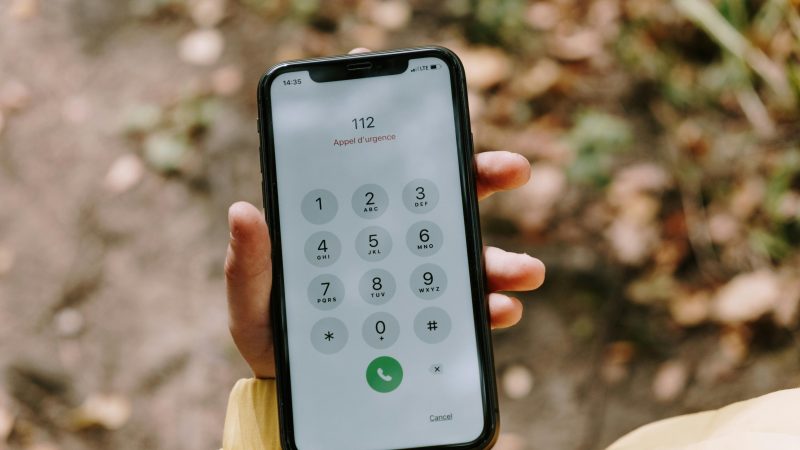
The call came on a Tuesday afternoon. The caller identified himself as an agent from the Social Security Administration. He told Lester that his Social Security number had been flagged in connection with a money laundering investigation in Texas and that, unless Lester cooperated immediately, his bank accounts could be frozen within 24 hours.
“He knew my name, my address, the last four digits of my SSN,” Lester told me, leaning forward over a small table in his office. “I run a business. I deal with licensing boards, the IRS, the state. I know what a government call sounds like — and this sounded exactly like that.”
The caller walked Lester through a “verification” process, asking him to confirm his full nine-digit Social Security number so they could “clear his file.” He also requested that Lester transfer $6,200 to a gift card account described as a secure federal holding account. By the time Lester called his wife that evening, the line was dead and the caller was gone.
What Lester could not have known in that moment was that his call almost certainly originated from one of several India-based fraud operations running industrial-scale Social Security impersonation. According to reporting on the FBI takedown, a coordinated effort by the FBI, local police, and Indian authorities shut down three such call centers tied to more than $50 million stolen from Americans. One victim in Maryland alone lost $1.7 million, according to the Washington Post.
Lester’s $6,200 was a small figure in that criminal ecosystem. The damage done with his Social Security number was not.
The Scale of the Damage
Within six weeks of that call, three new credit accounts had been opened in Lester’s name. A personal loan for $18,500 had been approved at a lender he’d never heard of. A credit card account carried a balance of $14,200. A third account at a regional bank had already accumulated $11,800 in charges. Total fraudulent exposure: approximately $44,500.
Lester discovered the fraud in November 2023 when he applied for a business line of credit to expand the daycare’s outdoor play area. The underwriter called to ask about recent delinquencies on his personal file. “I had no idea what she was talking about,” Lester said. “I thought she had the wrong person. Then she read me an address in Phoenix I’d never set foot in.”
His credit score, which had been 781 just three months earlier, had fallen to 514. At 64 — with a teenager heading to college in fall 2026, no employer-sponsored health insurance, and a business that needed operating credit — the collapse could not have come at a worse time.
Fourteen Months of Paperwork and Proving a Negative
Lester filed a fraud report with the Federal Trade Commission, placed credit freezes at all three major bureaus, and submitted a formal identity theft report with the Houston Police Department. He learned quickly that his Social Security number could not simply be replaced. The SSA issues new numbers only in narrow, extreme circumstances — meaning every fraudulent account had to be challenged individually, bureau by bureau, lender by lender.
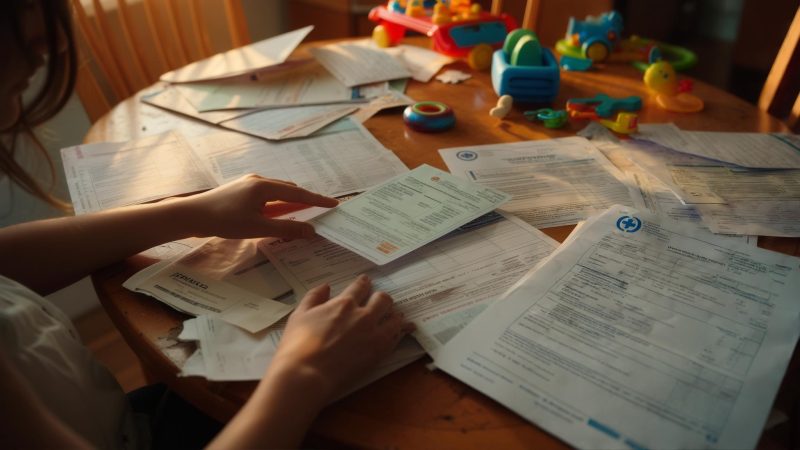
The hardest stretch, Lester said, was the personal loan dispute. The original lender had sold the debt to a collections agency before the dispute was even filed, which added months to the process. One bank required him to appear in person at a branch in a city he had never visited to complete a fraud affidavit. “They kept asking me to prove a negative,” he said. “Prove you weren’t in Phoenix. Prove you didn’t open this account. You’re essentially auditioning to be believed.”
He estimates he spent more than 200 hours — across calls, notarized affidavits, certified mailings, and follow-up disputes — over those fourteen months. Legal fees to an identity theft attorney totaled $3,800. The $6,200 he lost directly to the scam was never recovered.
What Comes Next: Health Insurance and the Medicare Clock
Even as the credit picture stabilized, a second pressure was running in parallel — one with no quick resolution. Lester does not offer employer-sponsored health insurance through his daycare, and as the business owner, he purchases his own coverage through the individual market. In 2024, a silver-tier plan covering himself and his wife ran $2,140 per month. At his income level, he did not qualify for Affordable Care Act subsidies.
His son Marcus has been accepted to a Texas state university, with first-year costs projected at approximately $27,000 for tuition, room, and board. Combined with health premiums, Lester is managing roughly $52,000 in unavoidable annual outflows — on top of normal business operating costs — while simultaneously rebuilding the credit that the fraud erased.
Lester is counting down to Medicare eligibility the way he monitors his daycare’s licensing renewals — with dates circled and contingencies mapped. What he cannot control is the cost and coverage gap between now and March 2027. “My accountant calls me data-driven,” he said, with a tired laugh. “I call it terrified with a spreadsheet.”
When I left his office, I walked through a hallway covered floor-to-ceiling in children’s artwork — painted handprints, crayon self-portraits, paper sunflowers. Lester was already back on the phone with a vendor. He had told me, as we wrapped up, that he was hopeful about the next two years. But hopeful the way someone is hopeful when they have done all the math and don’t entirely like the result.
“One more year of paying for something I barely use,” he said, “and then maybe I get a little breathing room.” He paused. “Or Marcus picks a graduate school and we start this whole thing over.”
The FBI’s crackdown on India-based call centers posing as the SSA was a meaningful enforcement action — but the $50 million figure attached to those three operations almost certainly understates the true cost when secondary damage like destroyed credit, lost business opportunities, and legal fees is counted. For Lester, the nine-minute phone call in September 2023 cost him fourteen months and roughly $10,000 in direct and indirect losses. The credit he rebuilt is real. The trust he lost in a ringing phone is something else entirely.

Leave a Reply