

Have you ever made a financial plan so detailed, so carefully mapped out, that you stopped thinking of it as a plan and started thinking of it as a fact? Darlene Jeffries had. And it cost her.
I met Darlene on a rainy Tuesday in late February 2026, at a free tax preparation clinic hosted by a local nonprofit in Tampa’s Ybor City neighborhood. She was sitting in a plastic chair with a manila folder thick enough to double as a doorstop, flipping through W-2s and bank statements with the focused calm of someone who does this every year. I asked if she’d be willing to talk. She looked at her folder, then at me, and said, “You picked a good week.”
We found a quiet corner of the room after her appointment wrapped up. What she told me over the next ninety minutes was a story about old debt, family obligation, and the specific kind of dread that comes from losing money you never technically had in hand.
The Setup: A Solid Income With Complicated Edges
By most measures, Darlene, 37, is doing well. She works as a construction foreman in the Tampa metro area, supervising crews on commercial builds across Hillsborough County. Her 2025 W-2 showed gross earnings of $94,200. She and her husband file jointly, and their combined household income sits comfortably in the upper-middle range.
But income, as anyone who earns it knows, is not the same as financial stability. Darlene has a teenager — her daughter Kayla — who is enrolled to start college at the University of South Florida in fall 2026. Tuition, housing, and fees will run somewhere north of $22,000 for the first year. And every month, without fail, Darlene sends $600 to her mother in Savannah, Georgia, who is 64, partially disabled, and waiting on a Social Security eligibility decision that has dragged on for fourteen months.
“It’s not a burden I resent,” Darlene told me, straightening a stack of papers in her lap. “But it is a variable. And I hate variables I can’t control.”
She had been expecting a federal refund of approximately $3,100 this year — enough to cover Kayla’s dorm deposit and a few hundred dollars toward textbooks. It was not a luxury. It was a line item.
The Debt She’d Half-Forgotten
In 2016, Darlene was in a different chapter of her life. She was working lower-wage construction labor, not yet a foreman, recently separated from a first relationship, and carrying about $8,400 in credit card debt across two accounts. When the financial pressure peaked, she stopped making payments on one of those cards — a $4,200 balance with a regional bank. “I told myself I’d circle back to it,” she said. “I never circled back.”
The account was charged off, sold to a collections agency, and then largely fell off her radar. She rebuilt her finances, advanced in her career, remarried, and built what she described as “a real budget” in 2021. But the debt didn’t disappear. It sat in a collector’s portfolio, accruing fees, until it was reportedly referred for a federal Treasury offset — a process that allows certain creditors to intercept federal tax refunds through the Bureau of the Fiscal Service’s Treasury Offset Program.
When the intercept notice arrived in her mailbox in early February 2026, the balance claimed was $11,240 — the original $4,200 plus nearly a decade of interest, collection fees, and penalties. Her entire $3,100 refund was flagged for seizure. Every dollar of it.
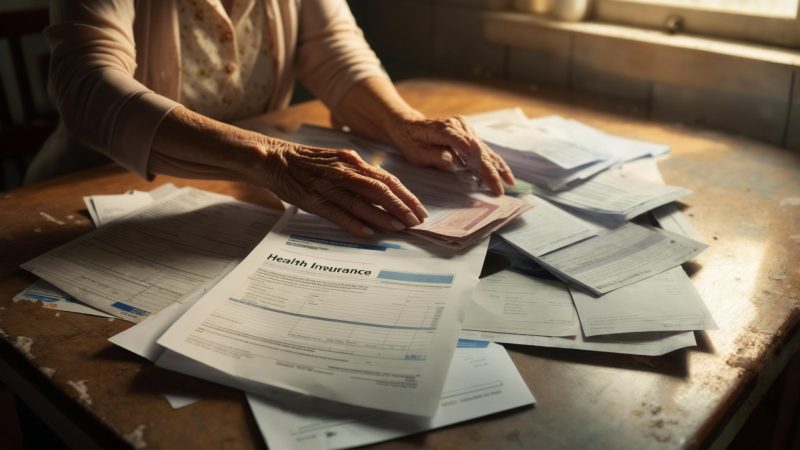
That evening, she sat down at the kitchen table with her husband Marcus and went through every document she had. She found the original charge-off notice from 2017, which she had saved in a box she hadn’t opened in four years. She found a letter from a collections agency dated 2022 — one she remembered receiving but not responding to.
Walking Into the Clinic: Looking for Clarity, Not Rescue
Darlene did not come to the tax prep clinic in Ybor City looking to be saved. She came because she wanted a second set of eyes — someone who could confirm whether the offset was calculated correctly, whether anything could be disputed, and whether her filing strategy should change going forward. She brought everything.
As she explained to me, the volunteer preparer at the clinic walked her through how the Treasury Offset Program works: the intercept is applied before a refund is issued, meaning there is no window to negotiate once the return is processed. The IRS Topic 203 guidance confirms that refunds can be reduced or eliminated for debts including past-due federal taxes, state tax debts, child support, and certain other federal obligations — including debts held by private collectors who have been authorized through federal programs.
What the preparer found — and what gave Darlene a sliver of hope — was a discrepancy in how the fees had been calculated on the claimed balance. The original collector had reportedly applied a fee schedule that may not have been consistent with Florida’s statute of limitations on debt collection, which under Florida Statutes §95.11 generally limits the collection window on written contracts to five years.
The debt itself was old enough to be legally complex. Whether that complexity would yield any practical result was another matter entirely.
The Family Conversation Nobody Wanted to Have
The loss of the $3,100 refund forced a conversation Darlene had been quietly postponing. Kayla’s dorm deposit of $400 was due in March. The family had the cash — barely — but it meant tapping a savings buffer they’d been building for eight months.
More than the money, the situation forced Darlene to re-examine the monthly $600 she sends to her mother. That $7,200 annually represents real college savings, real emergency fund contributions, and real retirement contributions that do not happen. She is methodical about her budget — she showed me a spreadsheet she updates every two weeks — but the family support line item had always been non-negotiable in her mind.
She and Marcus spent a weekend going through their entire financial picture. The outcome was not dramatic — no accounts closed, no major restructuring. But they made two decisions: Darlene would formally dispute the fee calculation on the debt balance, and they would apply for a Parent PLUS loan to cover at least part of Kayla’s first-year costs rather than relying entirely on savings and the now-absent refund.
Where Things Stand Now
When I spoke with Darlene again by phone in late March 2026, the dispute was still pending. The collecting agency had forty-five days to respond to her validation request. She had heard nothing yet. The $3,100 offset had been applied and was gone.
Kayla’s deposit was paid. The PLUS loan application was submitted. Darlene’s adjusted withholding kicked in with her March paychecks, which she said felt “strange — like I’m already spending money I haven’t protected yet.”
She was realistic about the outcome of her dispute. “I’m not expecting a check in the mail,” she said. “I just want to know the number was right. That’s what’s keeping me up — not knowing if they even did the math correctly.”
Her mother’s Social Security case is still pending. Darlene said she expects a decision by summer 2026, though she’s learned not to count on any particular timeline. If her mother is approved for benefits, the $600 monthly transfers will likely continue anyway — reduced perhaps, but not stopped.
What Darlene’s Story Reflects About a Broader Problem
Darlene is not unusual. She is organized, employed, and earning a salary that most Americans would consider solid. And she still walked into a free tax clinic in February with an intercepted refund, a college deposit deadline, and a ten-year-old debt that had doubled in size on paper.
What struck me about her situation was not the financial complexity — it was the emotional precision. She did not spiral. She did not catastrophize. She sat down with her documents, found the right people to ask the right questions, and made the most pragmatic decisions she could with the information available. That is not luck. That is a person who has learned, expensively, how to absorb a hit and recalibrate.
When I closed my notebook and thanked her for her time, she had already moved on mentally. She was thinking about Kayla’s orientation schedule and whether the dorm assignments would be posted before June. The debt, the offset, the dispute — those were problems in motion. Her daughter’s first year of college was coming regardless.
Some stories resolve cleanly. This one, at least for now, does not. But Darlene Jeffries is still building the plan.
Related: He Earned $80,000 a Year as a Union Electrician — Then COBRA and a Debt Garnishment Nearly Erased His Retirement



Leave a Reply