
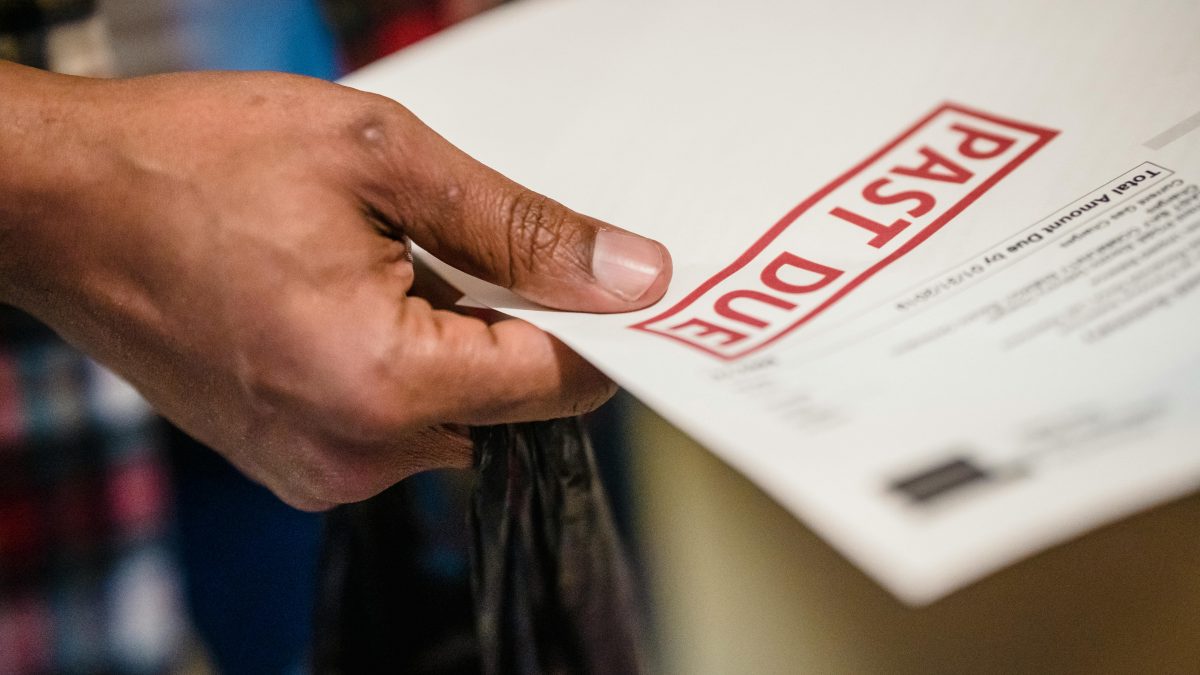
The first week of April brings a hard deadline for millions of American workers: the federal tax filing cutoff on April 15, 2026. For workers in Brittany Holloway’s income bracket, that window carries real consequences — because certain tax credits worth hundreds of dollars disappear if you don’t claim them. When I reached Brittany by phone in late March, she hadn’t yet filed. She also wasn’t sure she knew what she was entitled to.
Brittany Holloway is 25 years old. She works as a dental assistant in Nashville, Tennessee, earns $17 an hour, and carries $11,000 in total debt — $8,000 in federal student loans from community college and a $3,000 balance on a credit card she opened at 19. She is the first person in her family to finish any college at all. And she is, by her own description, completely overwhelmed.
A Paycheck That Doesn’t Stretch Far Enough
At $17 an hour, Brittany’s gross annual income comes to approximately $35,360 — before taxes. In Nashville, where the median one-bedroom apartment now lists above $1,400 a month according to local housing trackers, that math gets tight quickly. After federal and state taxes, her take-home runs close to $2,400 a month. Rent takes roughly $1,350 of that.
“I thought when I got a real job, it would feel like relief,” Brittany told me. “Instead I’m watching every dollar and still feeling behind.”
What’s left after rent, utilities, groceries, and a car payment hovers around $300 to $400 a month — the margin where most of Brittany’s financial anxiety lives. She hasn’t missed a payment on anything. Her student loans are in repayment. Her credit card gets the minimum plus a little extra. But there’s almost nothing going to savings.
The TikTok Financial Education Problem
When I asked Brittany how she learned about personal finance, her answer was immediate: “TikTok, mostly. And sometimes Reddit.” She described spending 20 to 30 minutes a day watching financial content — creators telling her to invest in index funds, others saying she must eliminate all debt first, others promoting high-yield savings accounts as the only safe move. None of it agreed.
The conflicting advice isn’t imaginary — it reflects a genuine debate among financial writers and planners. The answer often hinges on interest rates: a credit card carrying a 22% APR is a different problem than a federal student loan at 5%. But that nuance rarely makes it into a 60-second video. Brittany’s credit card, she confirmed, charges around 24% interest. Her student loans sit at 5.5%.
She was also comparing herself to peers on social media — friends posting about buying cars, going on trips, talking about their 401(k). “I know it’s not real,” she said, “but it still makes me feel like I’m doing something wrong.”
A Tax Filing She Almost Skipped
One concrete thing that came out of our conversation was Brittany’s tax situation. She hadn’t yet filed for tax year 2025, and she told me she almost didn’t bother — she assumed she’d get almost nothing back and didn’t see the point of “the hassle.”
That assumption could have cost her. According to the IRS EITC income tables, a single filer with no qualifying children earning around $35,000 may still qualify for the Earned Income Tax Credit — though the benefit phases out significantly at that income level. More relevant for Brittany: the IRS Saver’s Credit, formally called the Retirement Savings Contributions Credit, allows low-to-moderate income workers to claim a credit of 10% to 50% of their retirement contributions, up to $2,000 contributed.
Brittany told me her employer does not offer a 401(k), which is common in smaller dental practices. She had not opened an IRA. That meant she had no 2025 retirement contributions to claim the Saver’s Credit against — but the conversation prompted her to look into whether she could open and fund a Roth IRA before April 15, which would count toward tax year 2025 contributions.
“I didn’t know you could do that. Open it and have it count for last year,” she said. “That’s the kind of thing nobody tells you.”
The Debt Decision She’s Still Wrestling With
By the time I spoke with Brittany, she had settled into a rough strategy — but it wasn’t one she felt confident about. She was paying $75 a month extra toward her credit card, on top of the minimum, while making standard payments on her student loans. She wasn’t saving anything beyond a $600 emergency fund that had taken her nearly a year to build.
“My plan right now is knock out the credit card, then figure out the rest,” Brittany told me. “But then I see something online about how I’m losing time in the market and I second-guess everything again.”
She mentioned looking into income-driven repayment options for her student loans after seeing a post about them on social media. According to Federal Student Aid, borrowers with federal loans may qualify for income-driven repayment plans that cap monthly payments at a percentage of discretionary income — which at Brittany’s salary could meaningfully lower her required monthly obligation and free up cash.
What She Knows Now That She Didn’t Before
By the end of our conversation, Brittany wasn’t transformed. She didn’t have a fully mapped-out financial plan. What she had was a list of specific things she planned to look into — and a clearer sense of which questions actually mattered for her situation right now, versus the general advice aimed at people with very different incomes and circumstances.
She mentioned that growing up, money was never explained — just felt. Her family’s financial stress was ambient, present in every conversation about whether they could afford something, but never broken down into concepts or strategies. “I’m the first one to go to college in my family, and nobody told me what to do after,” she said. “You’re just supposed to figure it out.”
That gap — between finishing school and understanding the systems that govern your financial life — is one that plays out quietly for millions of workers at Brittany’s income level. The TikTok advice fills the space, for better or worse, because nothing else did first.
When I ended the call, Brittany said she was going to look up Free File on the IRS website that night. It was a small step. But it was a concrete one — with a real deadline attached, and a real amount of money potentially on the other end.
Related: We Look Fine on Paper: How $280K in Med School Debt Is Quietly Threatening Our Retirement Security




Leave a Reply