

Most financial advice assumes you made the mistake. Conventional wisdom says debt is a personal failure — a consequence of overspending, poor planning, or greed. But sometimes the bill arrives in your name for someone else’s choices, and there is nothing conventional about surviving that.
That was the first thing Clint Dupree said to me when we sat down together at a folding table in the back of a veterans’ support center off Kingston Pike in Knoxville, Tennessee, on a Tuesday evening in late February 2026. A mutual contact at the group had flagged his story a few weeks earlier — quietly, without Clint’s knowledge at first. When I reached out, he took two days to respond. When he did, his message was short: “I’m not looking for sympathy. But if it helps someone else, fine.”
Clint Dupree is 45 years old. He works as a licensed security guard at a commercial facility on the east side of Knoxville, pulling in roughly $34,000 a year before taxes. He owns a modest single-family home he bought in 2017 for $112,000 — a point of genuine pride for a man who describes himself as someone who never wanted to owe anyone anything. He is also, as of March 2026, $3,200 behind on his Knox County property taxes, and quietly terrified about what happens next.
The Signature That Started Everything
The loan was $8,500. Clint cosigned it in the spring of 2023 for a former Army colleague — someone he’d served with and trusted implicitly. The funds were meant to cover vehicle repairs and a short-term cash gap while the man waited on a job offer to come through. It seemed straightforward. The lender, a regional credit union, ran the application in both names.
By November 2023, the friend had stopped making payments. By February 2024, the credit union was calling Clint’s number.
As a cosigner, Clint was equally liable for the full balance. He began making the monthly payments himself — $247 per month — on top of his regular expenses. He was also, at the time, sending approximately $400 a month to help his younger sister, Renee, cover tuition shortfalls at Tennessee Tech University. The math did not work. Something had to give.
What gave was his property tax bill.
When Property Taxes Become the Last Priority
Knox County property taxes on Clint’s home run approximately $1,340 per year, due in full each February. In February 2024, he paid only $600 — enough to avoid the most immediate penalties, he thought. In February 2025, he paid nothing at all. By early 2026, the accumulated balance with interest and late fees had climbed to $3,200.
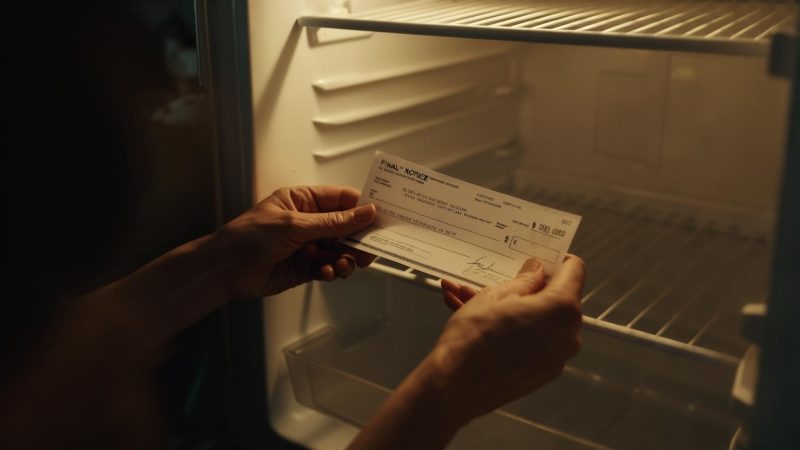
In Tennessee, delinquent property taxes accrue interest at 1.5% per month after the due date, and the county can initiate a tax lien sale process if the debt remains unpaid for more than a year. Clint knew this in the abstract. Sitting across from me, he admitted he had been avoiding looking at the actual notices that had been arriving since mid-2025.
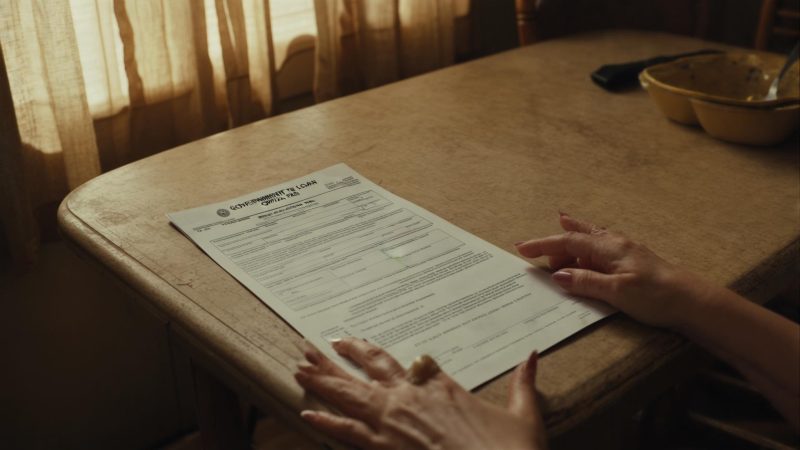
“I put them in a drawer,” he said plainly. “Not because I didn’t care. Because every time I opened one, I felt like I was about to lose the only thing I actually own.”
The Tax Picture Underneath It All
Clint files his federal taxes every year — always has. But the cosigned loan default introduced a wrinkle he hadn’t anticipated: the credit union eventually charged off the remaining balance of approximately $5,100 in late 2024 and issued a Form 1099-C, reporting that amount as cancelled debt income. Under IRS rules, forgiven debt is generally treated as taxable income in the year it is cancelled, according to IRS guidance on delinquent taxpayer accounts.
That meant Clint owed federal income tax on $5,100 he never actually received — money that had been spent by someone else, on a truck he’d never seen. His 2024 tax return, filed in March 2025, showed an unexpected federal balance due of roughly $612 after withholding. He paid it, but the timing — landing in the same window as his property tax delinquency — compounded the pressure.
Clint told me he used a basic online filing tool for his 2024 return and was caught off guard by the 1099-C treatment. For context, tax software platforms like TaxAct and TurboTax both include guidance on cancelled debt income, though navigating that guidance alone — without a tax professional — is genuinely difficult for someone in Clint’s position.
He did not use either. He used a free tool offered through his employer’s benefits portal, and it flagged the 1099-C without fully explaining the insolvency exception — a provision that can reduce or eliminate tax liability on cancelled debt if your liabilities exceeded your assets at the time of cancellation.
Social Security, Wages, and the Math of Working Through It
At $34,000 a year, Clint pays Social Security taxes on his full income. In 2026, the Social Security wage cap sits at $184,500, according to reporting on 2026 Social Security changes — a threshold Clint is nowhere near, and one that carries a different kind of irony for someone like him. Higher earners stop paying Social Security taxes once they cross that cap. Workers at Clint’s income level pay on every dollar, all year long.
He is aware of this. He doesn’t express bitterness about it, exactly — more a low-grade exhaustion at the arithmetic of his situation. “I work 45 hours a week,” he told me. “I’m not trying to get out of paying taxes. I just want to keep my house.”
The Turning Point: A Veterans’ Meeting and a Piece of Paper
Clint had been attending the veterans’ support group for about eight months before he mentioned any of this publicly. He described it as an offhand comment during a session in January 2026 — something about “the notices” — and another group member, a woman who had previously worked in a county assessor’s office in another state, pulled him aside afterward.
She told him about Tennessee’s Property Tax Relief Program, which provides assistance to qualifying elderly and disabled homeowners — a program Clint does not qualify for based on age. But she also pointed him toward the Knox County Trustee’s Office, which has historically offered payment arrangements for delinquent accounts before they escalate to lien sale proceedings. He had not known this was an option.
When I spoke with Clint in late February, the Knox County Trustee’s Office had verbally confirmed a payment arrangement was likely possible — structured across 12 months at approximately $275 per month. Nothing was finalized. But the drawer was empty.
Where Things Stand Now
As of our last conversation in mid-March 2026, Clint was waiting on a callback to formalize the Knox County repayment plan. The VITA review of his 2024 return was still pending — he wasn’t sure yet whether he’d overpaid or been appropriately assessed on the 1099-C income. The cosigned loan, as far as he knows, remains a mark on his credit report that won’t age off until 2030.
He hasn’t heard from his former Army colleague since the spring of 2024. He says he doesn’t expect to.
Renee is expected to graduate in May 2027. Clint has the date marked on a calendar above his kitchen table. He showed me a photo on his phone. He talked about her the way people talk about the one good bet they’ve made that’s definitely going to pay off.
What struck me most about sitting with Clint Dupree for two hours in a veterans’ center in Knoxville was not the complexity of his financial situation — it was the self-contained, load-bearing silence he had built around it. He had told almost no one. He had asked for almost nothing. And the moment someone pointed him toward a single county office and a three-letter acronym — VITA — the entire weight of the situation shifted, even slightly, enough to matter.
Roughly 70% of U.S. respondents in a first-quarter 2026 survey reported concern about how taxes would affect their retirement income, according to Plan Adviser’s retirement survey coverage. Clint is not thinking about retirement income right now. He is thinking about February 2027, and whether the payment plan holds, and whether his sister walks across a stage in a cap and gown. That is the full scope of his financial horizon, and it is not a small one.
“I’ll figure it out,” he told me as we wrapped up. “I always have. I just needed to know there was something to figure out — that it wasn’t already over.”
It isn’t over. Not even close.


Leave a Reply